Reflecting on 2025 at Theratrak: Year in Review

Just like within a therapy program, we believe reflection matters.

The end of each year gives us the opportunity to pause, look back on what we’ve built, and consider how far we’ve come.

In 2025, our focus continued to sharpen around supporting clinicians sustainably, improving engagement without increasing admin, and building systems that work with therapy - not against it.

Across events, conversations, content, and product development, this year was about listening closely - and evolving Theratrak in ways that genuinely support therapy practice.

From honest conversations about burnout to steady product improvements behind the scenes, much of this work has laid the groundwork for what’s coming next.

Here’s a snapshot of what the 2025 year looked like for the Theratrak team.

2025 Highlights Across the Theratrak Community

Theratrak Product Progress & Platform Updates

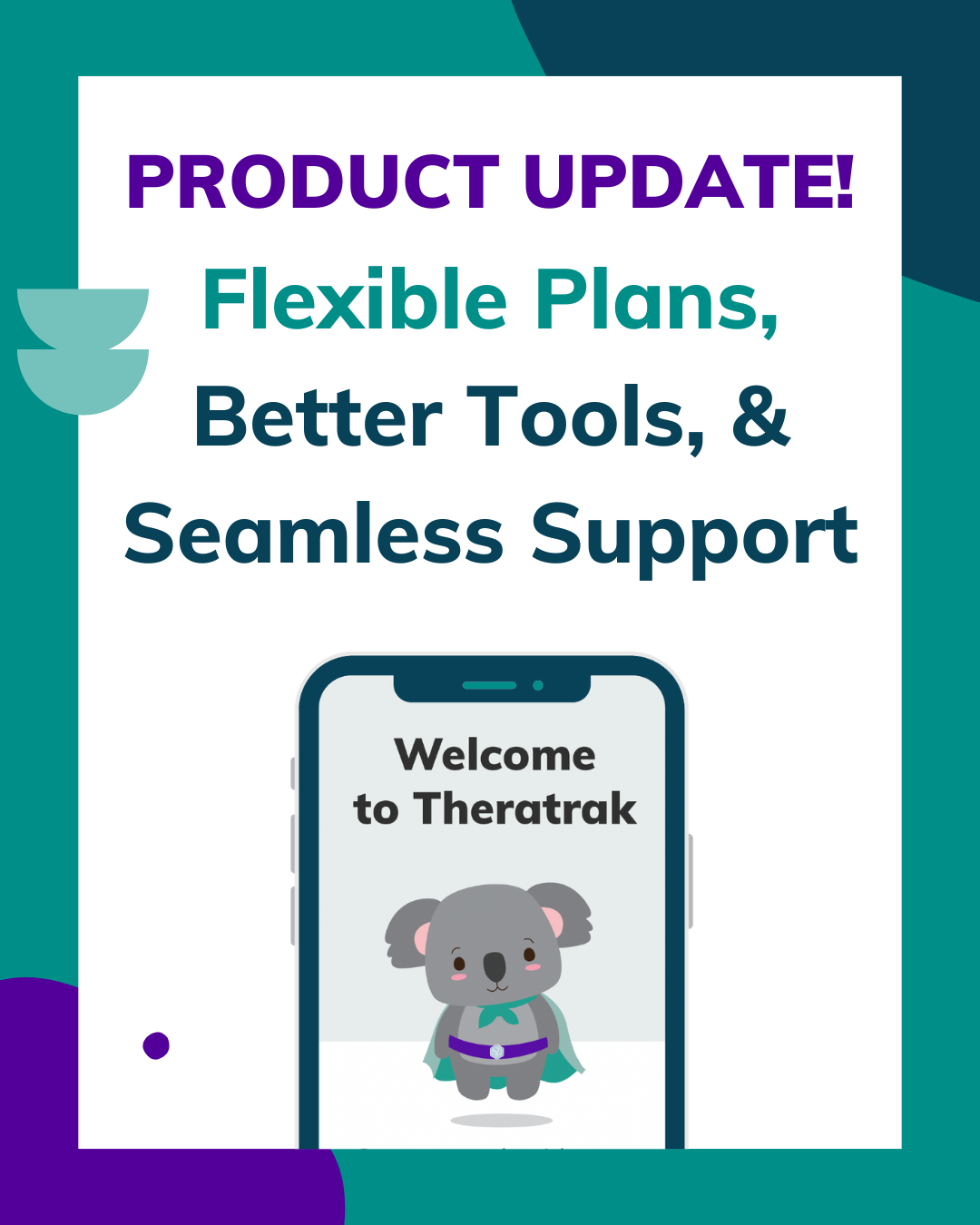
Behind the scenes, the Theratrak platform continued to evolve in response to clinic feedback and day-to-day realities of practice. Our product updates focused on flexibility, transparency and ease of use for clinics.

This year’s Theratrak product updates included:

  • Simplified onboarding with no credit card required, making it easier for clinics to explore Theratrak. Alongside our 30-day free trial, we’ve made the onboarding process easier, so that therapists can get started, get tracking, and provide more value for their participants quickly.

  • In-portal licence management, giving clinics more flexibility and control as teams grow (which they often do once a clinic starts to use Theratrak!).

  • Refined tiered pricing to better align with how clinics actually use the platform with growing teams.

  • A major milestone has been our Halaxy case management platform integration. Everything we do at Theratrak is done with the goal of easing therapist’s workflows, and this partnership reduces duplication and improves workflow efficiency for therapists. View the IG announcement.

As always with our co-design approach, every update we make has been shaped by real clinic feedback - not assumptions. If you’re interested in testing out our new features before we release them publicly, please get in touch here.

Practical Resources for Therapists

Our blog and resource content in 2025 focused on breaking down shared challenges and offering accessible, clinician-friendly tools to address them.

Some of Theratrak’s key resources included:

Have some feedback for us about our resources? Send us a message here.

Participated in Multiple Industry Events

We were grateful to be a part of meaningful events with dedicated allied health clinicians, educators, researchers, students and lived-experience advocates at a range of events this year.

Each event offered important perspectives on how therapy is delivered, experienced, and supported.

Below is a snapshot of the events the Theratrak team were happy to be part of:

Occupational Therapy Australia (OTA) Conference - Adelaide, South Australia

  • The Theratrak team exhibited at the Occupational Therapy Australia (OTA) Conference, engaging with OTs around digital workflows, engagement, and sustainability in practice.

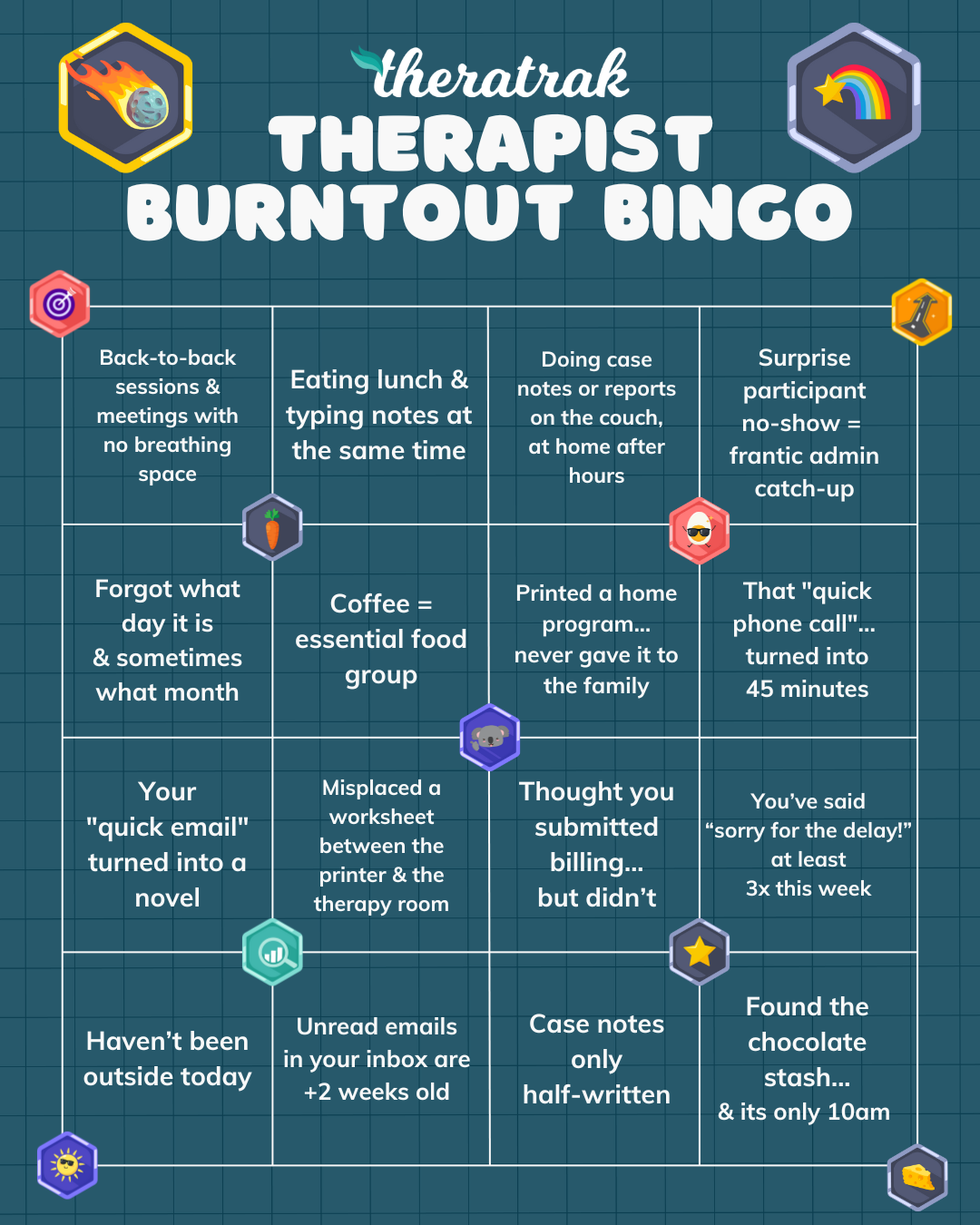
  • We ran our now well-known Burnout Bingo with therapists, gathering insight into the everyday pressures contributing to burnout in clinics. For these OTs, the most common burnout contributing activities they engaged in were:

    • Back to back sessions and meetings with no breathing space

    • Eating lunch and typing notes at the same time

    • That “quick phone” call that turned into 45 mins

    • Treating coffee as an essential food group (!)

  • Next year, Theratrak Founder Laura Simmons is once again on the OTA Conference Committee contributing to an innovative line-up of inspiring speakers and events - including the Pitch It Competition. Let Laura know if you’ll see her there.

  • See highlights from the event on IG.

Kids Source Disability Expo - Sydney, New South Wales

  • At the Kids Source Disability Expo, Laura valued connecting directly with families and other service providers navigating the complex world of disability support offers.

  • See highlights from the event on IG here.

Think Autism Conference - Sydney, New South Wales

  • At the Think Autism Conference, Laura participated in a panel centred on neuroaffirming systems designed by and for autistic people alongside Anita Aherne from Living on the Spectrum, Holly Fowler from Wable app, Natasha Siryj from Practice Inclusion, and Kate Lambridis from Human Health.

  • See highlights from the event on IG here.

  • Laura said of the event: “It was such a privilege to be part of this panel and share why co-design matters so deeply to us at Theratrak. Tech only works when people actually want to use it - and that starts by designing it with the people who need it most.


Go Beyond Therapy Conference - Online

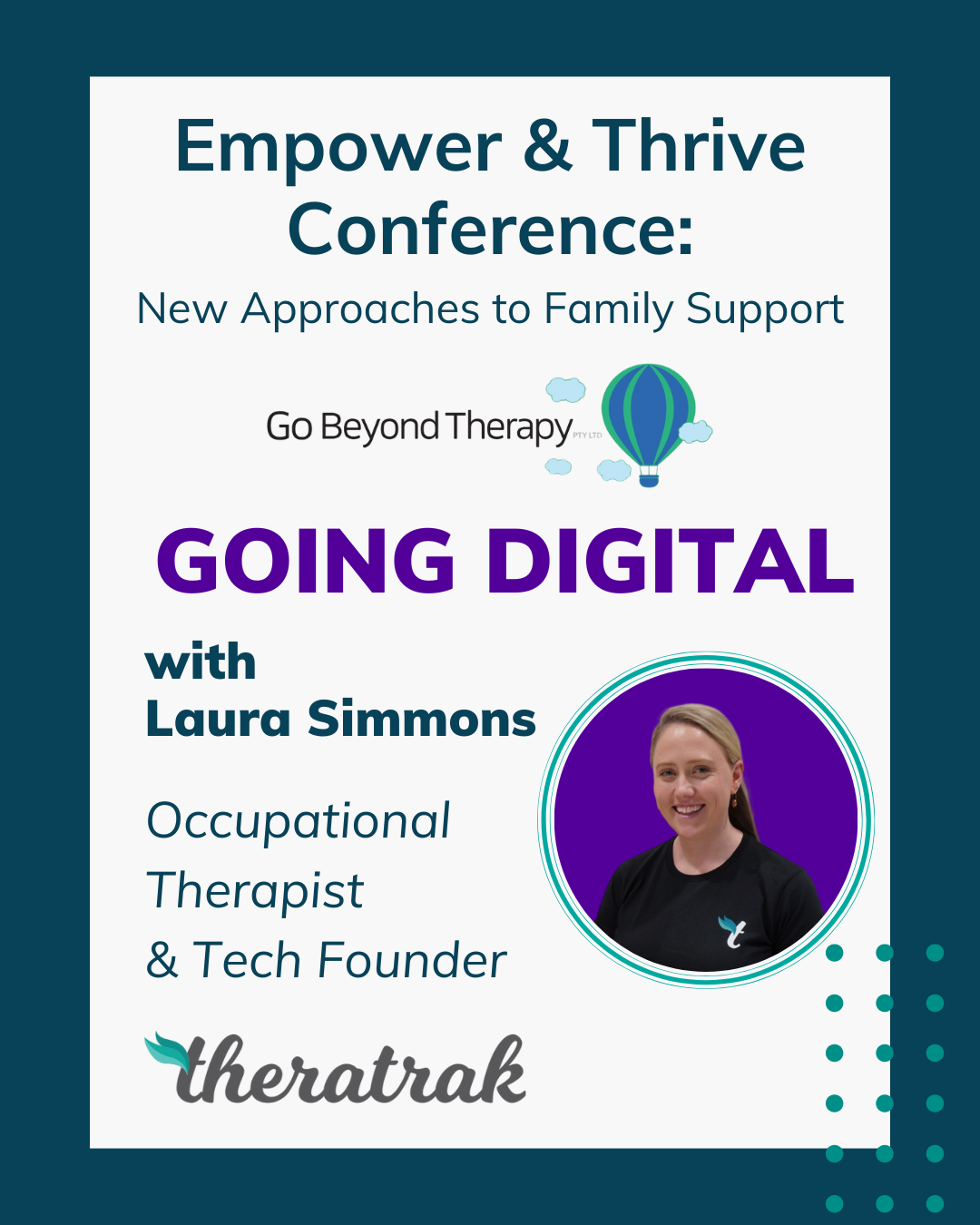
  • With a focus on new approaches to family support, Laura joined the Go Beyond Therapy Online Empower & Thrive Conference, which focused on confidence, growth, and therapist wellbeing. Laura led a practical and engaging session titled “Going Digital: How to Get the Most Out of Your Therapy Sessions”. The interactive workshop explored using digital tools to enhance therapy sessions, the real benefits (and challenges) of going digital in allied health, and strategies to encourage therapists to adopt digital solutions - and how to overcome common barriers.

  • See highlights from the event on IG.


SARRAH - Online

  • Following on from the inspiring SARRAH Conference in Mildura in October 2024, this year, Laura joined the SARRAH team online to explore how digital innovation can better support those in regional and remote communities. Laura discussed Future-Proofing Therapy: Leveraging Digital Innovation in Regional Communities. Laura shared real case studies and research on how digital tools like Theratrak are transforming therapy in rural areas - making high-quality care more accessible and bridging the gap for regional healthcare providers.

  • See highlights from the event on IG here.

  • Across all of these events, one message consistently stood out: clinicians want tools that are flexible, respectful of clinical reasoning, and realistic within busy environments.

If you’d like to engage Laura as a speaker at your next event, please get in touch here. Find out more about Laura’s speaking experience here.

OTA Connections Feature

This year, Theratrak was featured in OTA Connections Magazine, contributing to broader industry conversations about engagement, burnout, and the role of digital tools in allied health. In this Member Spotlight, Laura reflects on her journey from paediatric OT to digital health founder - sharing key inspiration for her role, the importance of leading with purpose, and why collaboration is at the heart of Theratrak’s mission. “I am always interested in meeting and learning from other innovative OTs around the world. I love discovering the positive social purpose behind their innovations.View the feature on IG here.

Laura appreciates being featured alongside occupational therapy leaders while sharing practical insights - not just product updates - with the profession.


Big Plans for 2026: Major Product Updates

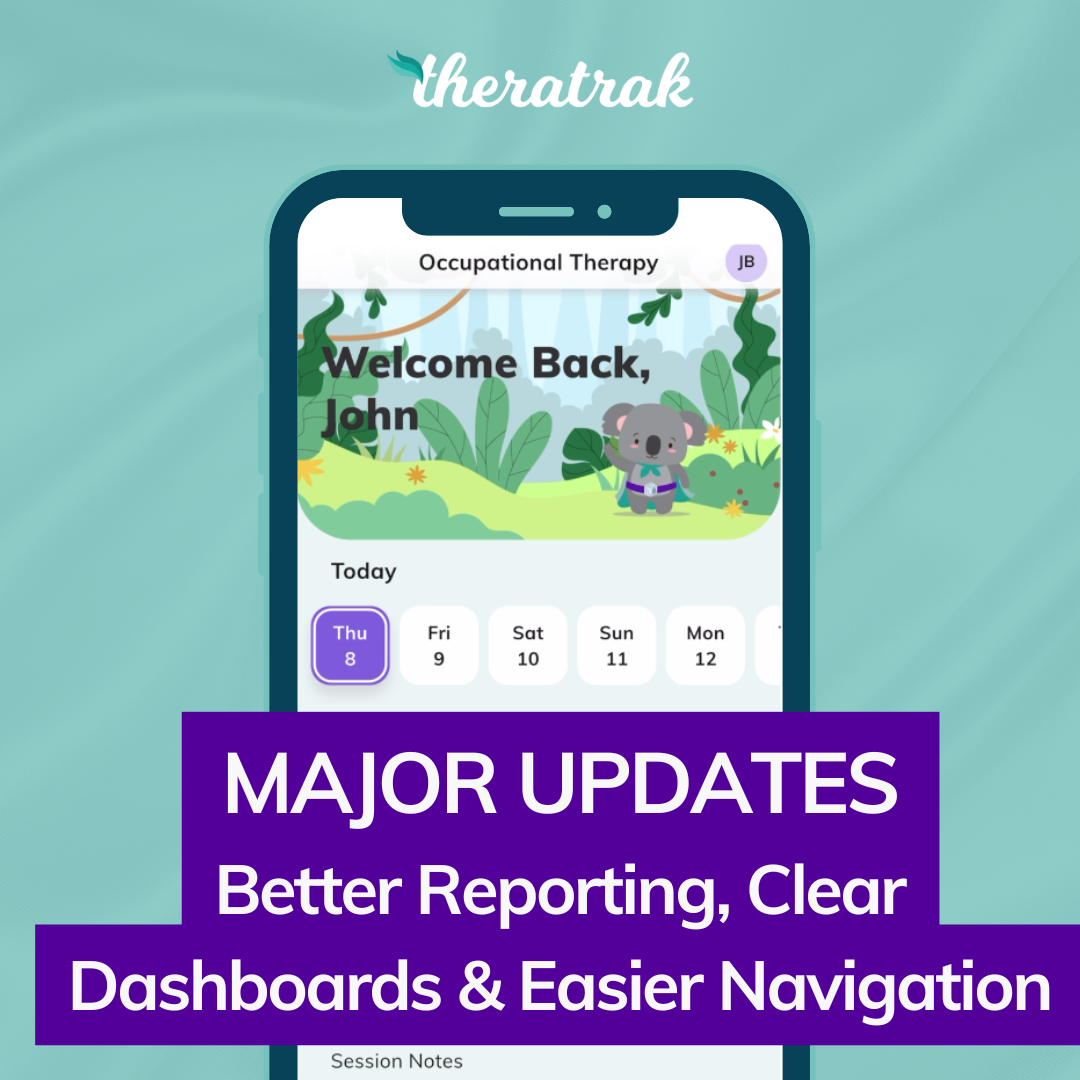
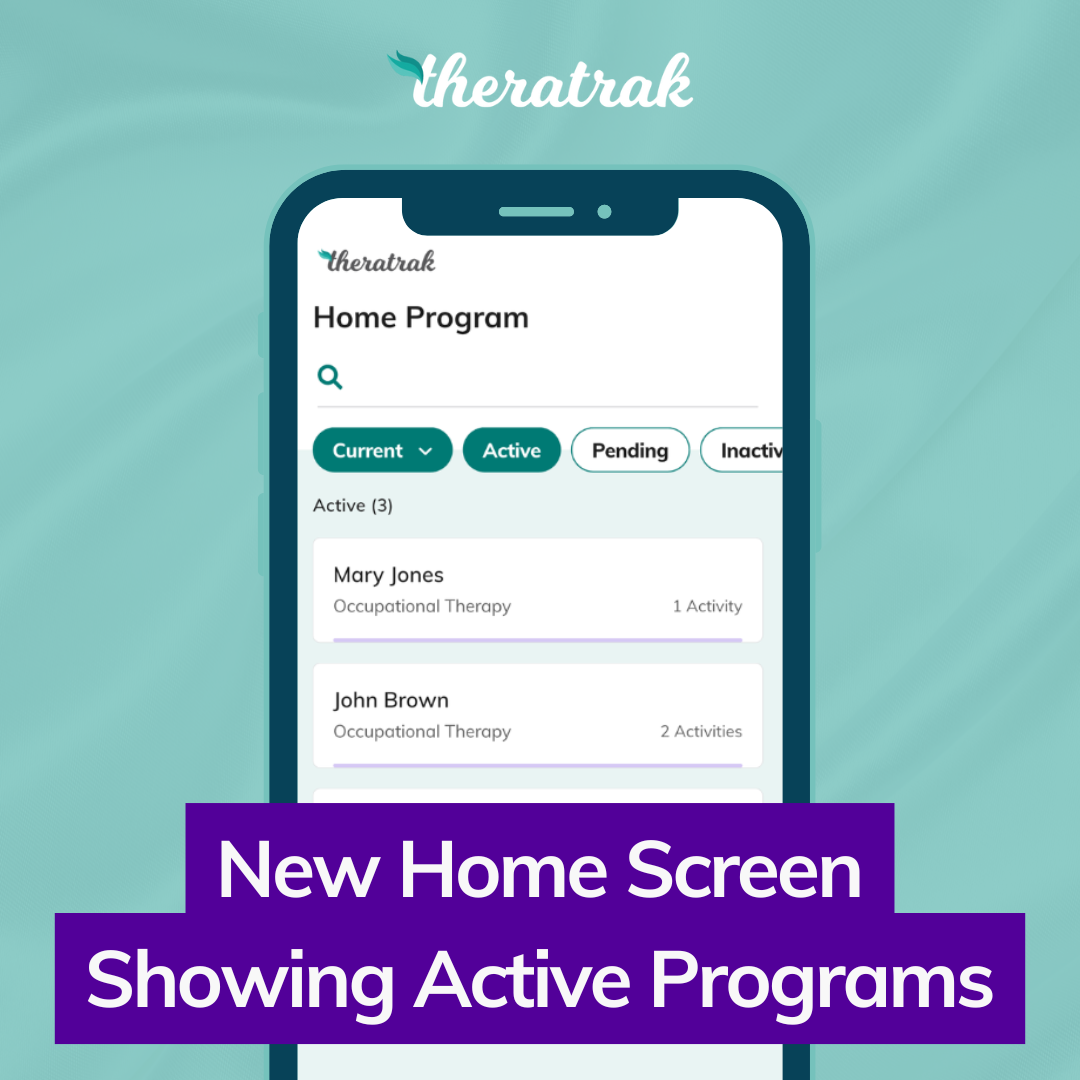
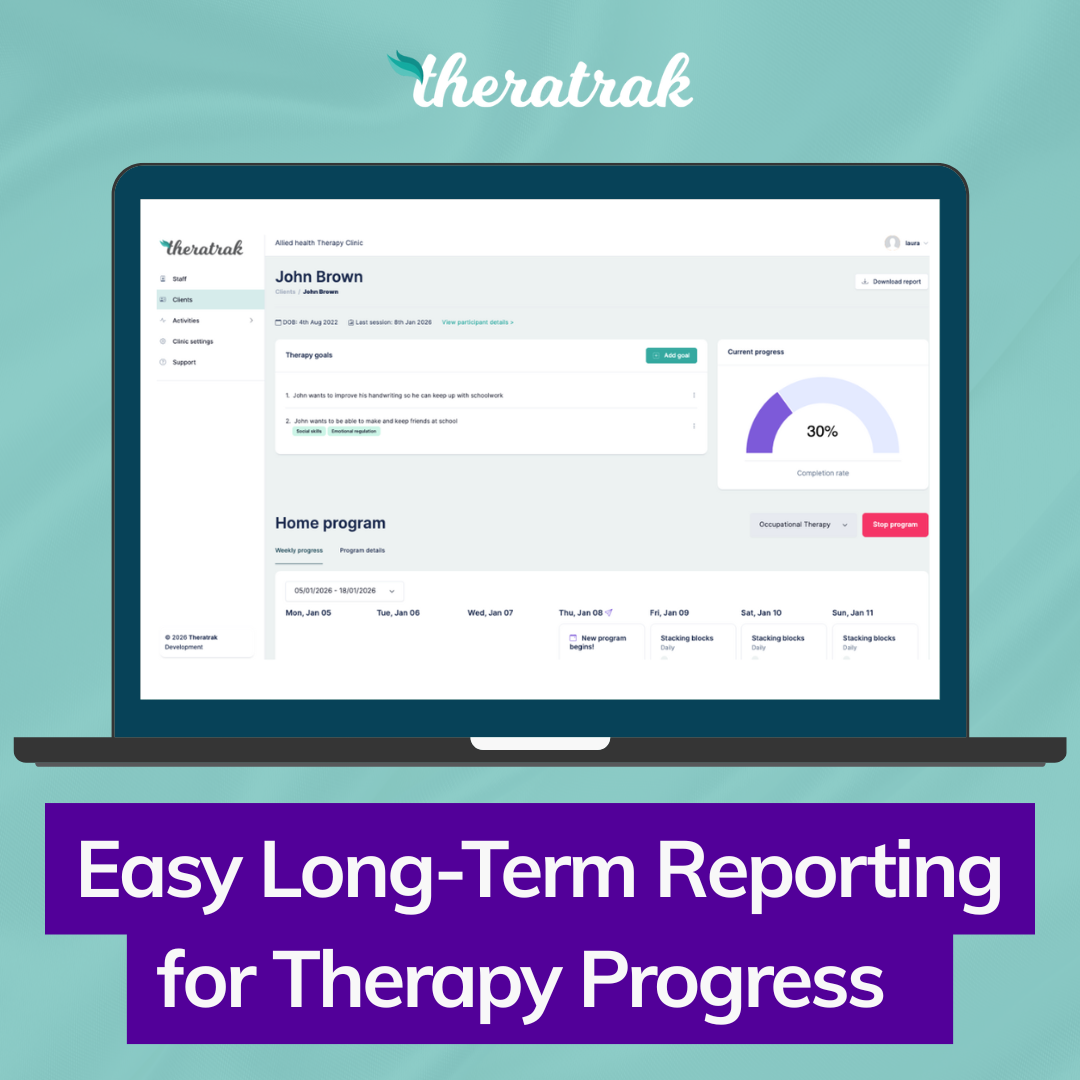
Behind the scenes, we’ve been working on significant updates to the therapist portal, with a strong focus on reporting, progress tracking, and usability. These changes are designed to make everyday workflows clearer, lighter, and more sustainable over time. Keep a lookout on our socials in 2026 for the announcement in the early new year!

We’re continuing to focus on creating a platform that supports clinicians to do what they do best - supporting participants - while we reduce unnecessary friction and admin along the way.

A huge thank you to the clinicians, clinics, researchers, partners, and community members who shared feedback, attended events, engaged with our content, and helped shape 2025 for Theratrak.

We’re looking forward to 2026!

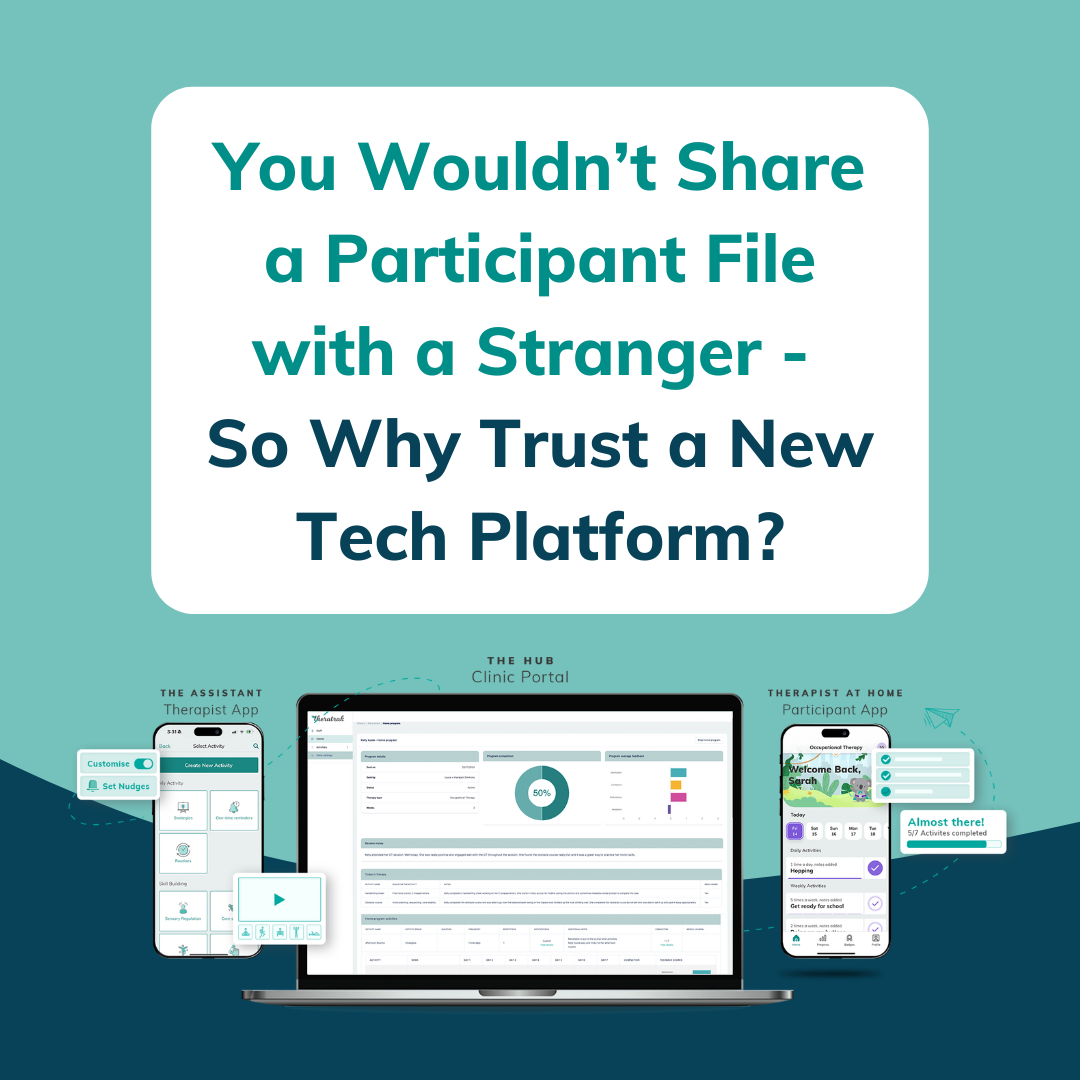
You Wouldn’t Share a Participant File with a Stranger - So Why Trust a New Tech Platform?

Therapists already take privacy seriously in your clinic.

They don’t leave case notes lying around.

They don’t share sensitive details without consent.

So when it comes to choosing a tech platform to support your therapy services - why should trust practices be any different?

Before a therapist clicks “accept” on the latest shiny app or free trial, read more below about what every allied health professional and clinic owner should know about data privacy, marketing rules, and digital responsibility in Australia.

Because not all tech is built for clinics. And not all platforms protect participants (or therapists) the way they should.


1. Data Privacy: What You’re Responsible For 🔐

In Australia, therapists are required to comply with the Australian Privacy Principles (APPs) - and that includes what happens to your participants’ data when it’s handled by third-party platforms. The APPs are a set of 13 principles that sit at the core of the Privacy Act 1988.

Here’s what the Australian Privacy Principles mean in real terms:

  • Personal Health Information (PHI) includes anything that can identify a participant - not just names and birthdates, but goals, diagnoses, routines, and care notes.

  • APP6 says you can’t share or use data for any purpose beyond what it was collected for, unless your participant consents.

  • APP8 says if your data is stored overseas, you need to ensure that data is still protected to Australian standards (or explicitly get informed consent).

  • APP11 requires that you take reasonable steps to protect all personal information from misuse or loss - including digital records.

So when using a tech platform in your clinic, the question isn’t “Are they compliant?” It’s: “Can we demonstrate that we are?”

At Theratrak, we adhere to the highest standards of data privacy and the Australian Privacy Principles.


2. Data Storage: Where Does It Actually Go? ☁️

Some apps store health data in countries with different laws and weaker protections. That can be risky - and potentially non-compliant.

At Theratrak, we:

  • Store all data securely on Microsoft Azure, one of the most trusted cloud providers in the world

  • Use enterprise-grade encryption

  • Enable multi-factor authentication (MFA) and PIN protection for extra security

  • Ensure all data is only visible to consenting participants

  • Are HIPAA certified for use across America - Health Insurance Portability and Accountability Act (1996) is used as a benchmark for data protection

3. Marketing & AHPRA: What You Can and Can’t Say 📣

It’s not just about data - it’s about communication too.

If a tech platform offers built-in messaging, automation, or marketing features, make sure they:

  • Don’t encourage testimonials or claims that breach Australian Health Practitioner Regulation Agency (AHPRA) advertising guidelines

  • Clearly distinguish marketing from service-related communication

  • Comply with the Spam Act and privacy rules around direct messaging

Theratrak never sends unsolicited marketing, and all participant communication is consent-based, secure, and traceable.


4. Rules, Records & Responsibilities 📁

When you use a tech tool in your practice, you’re still responsible for:

  • How long data is stored (typically 7+ years - longer for minors)

  • Who can access what and when

  • What happens to that data if you stop using the platform

Theratrak makes this easy.

Therapists maintain control, with access to export records, and decide access levels for teams, families, and wider care support networks.


The 5-Point Tech Safety Checklist for Allied Health Clinics ✅

Not sure what to ask a tech company before signing up?

To make it easy for busy allied health professionals, we’ve put together this checklist for when reviewing new allied health digital tools:

1. Where is our participant data stored?

At Theratrak? Uses Microsoft Azure in accordance with local compliance.

2. Is this data encrypted and access-controlled?

At Theratrak? Yes. Enterprise-grade encryption, MFA, and app PIN protection.

3. Is the tool privacy law compliant?

At Theratrak? Yes. Theratrak aligns with Australian Privacy Principles and HIPAA certified in the US.

4. Can we control who sees what?

At Theratrak? Yes. You set visibility and access per user.

5. Do we have a clear exit plan?

At Theratrak? Yes. You can or delete data anytime.


You Don’t Need to Know Everything about Tech - You Just Need to be Able to Answer a Few FAQs 🧠

Choosing a tech platform for your clinic isn’t just about features - allied health technology needs to have high standards around trust, transparency, and responsibility.

Never be afraid to ask your digital allied health tools about their security and privacy features.

At Theratrak, we built our tools with therapists in mind. From security to privacy to clear data policies, we’re here to support how the allied health industry works - and protect who you care for.

Learn more about Theratrak’s privacy policy and application terms.


Wondering how Theratrak can impact your clinic?

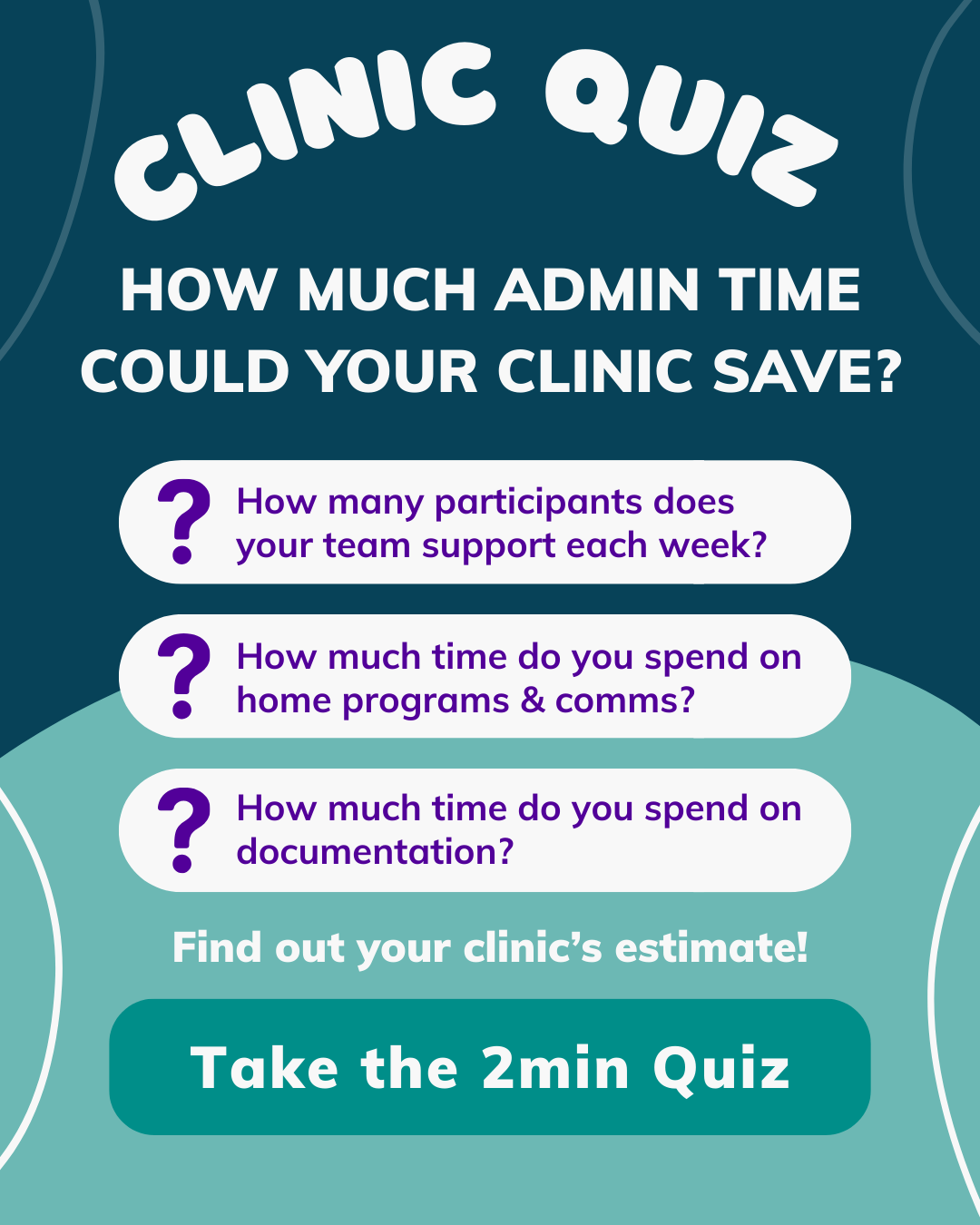
Take the Clinic Quiz to see how much time you could save after implementing Theratrak into your clinic.

Take the Clinic Quiz

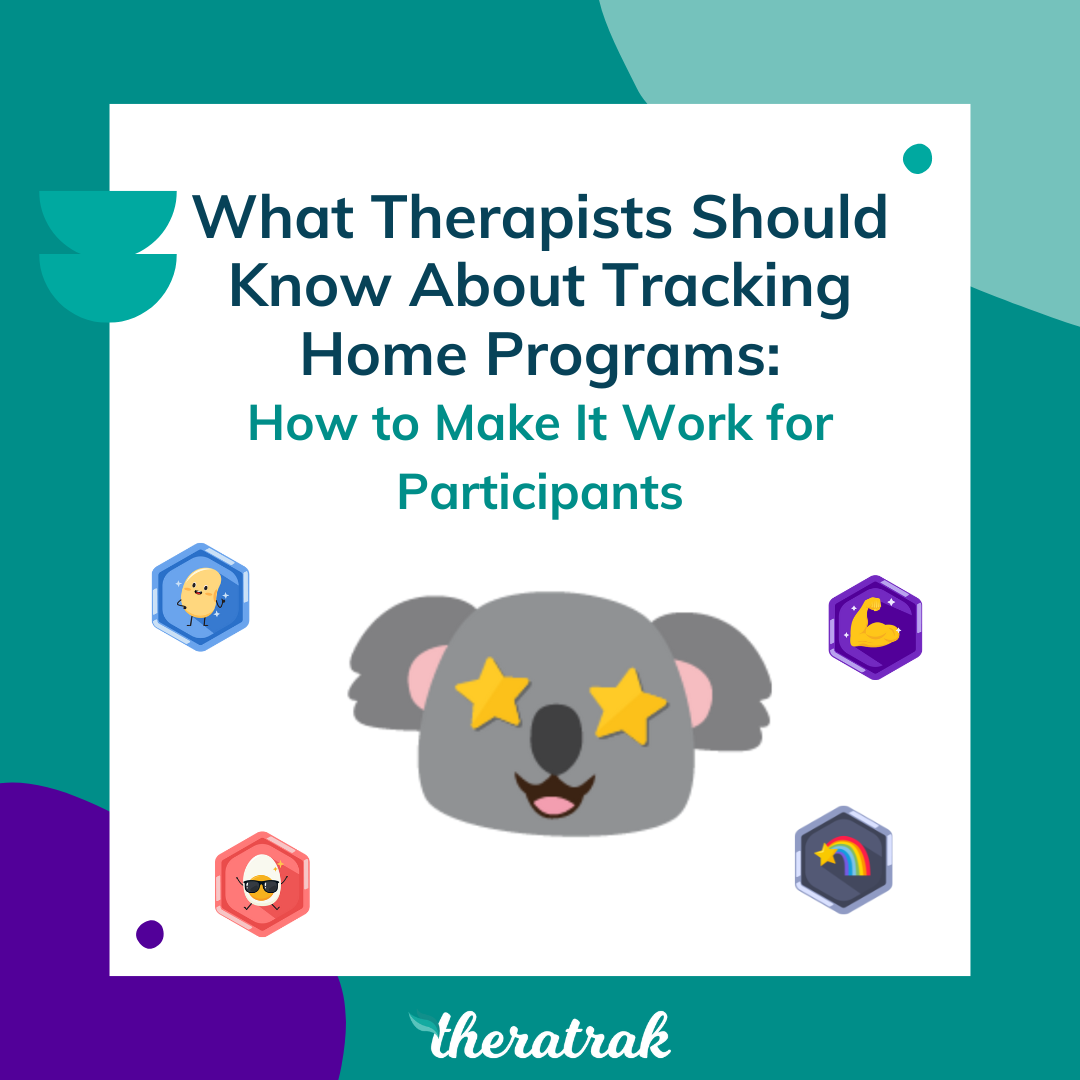
5 Things Therapists Should Know About Tracking Home Programs: How to Make It Work for Participants

Wondering why tracking home therapy matters, how to make it work at your clinic, and what to watch out for?

Read on below about five ways Theratrak can support your clinic to track progress over time.

Tracking home therapy programs isn’t just a nice-to-have - it’s one of the most powerful tools therapists have to deliver better care, reduce admin, and make data-informed decisions.

But too often, tracking is treated like an afterthought - or worse, another burdensome task on the to do list!

Theratrak is here to change that.


Here’s five things therapists should actually know about tracking: why it matters, what gets in the way, and how to make it work smarter (not harder) in your clinical practice.

1. Tracking Is a Clinical Superpower - When It’s Done Right

Home programs don’t live in a vacuum - they evolve over time in line with participant needs.

Tracking allows both participants and therapists to see what's working, what’s not, and where to adjust.

With a solid home therapy tracking system, therapists can:

  • Make data-informed decisions about whether to progress, repeat, or change a program 🧠

  • Reduce unnecessary admin with clear, time-stamped records of activity completion ⏱️

  • Have more meaningful conversations with families, grounded in real evidence of effort and outcomes 🗣️

  • Demonstrate impact within reports that clearly show how therapy is progressing over time 📊

This isn’t about micromanagement. It’s about making sure a therapist’s expertise translates into real-world progress - and that progress can be backed up by data.

2. Most Barriers to Tracking Are Emotional or Practical

Families don’t ignore tracking because they don’t care. They usually don’t track because:

  • It feels like extra work (on top of an already full life)

  • They’re not sure what to track or why it matters

  • They’re worried they’ll “fail” or do it wrong

  • They don’t see any immediate benefit for their child

A therapist’s role? Help reduce these barriers with clarity, empathy, and good tools. Find out more in this blog about how to reduce barriers to tracking at home for participants.

3. Use Digital Tools That Do the Heavy Lifting For Your Clinic

Tracking home progress should not add to your admin pile. Clinical admin takes time and attention away from what therapists do best - support participants.

That’s why digital tools like Theratrak were built - for therapists who need efficiency, visibility, and flexibility. Theratrak was created by an Occupational Therapist Laura Simmons who had a dream for a therapist assistant that could help streamline admin and improve engagement outside of sessions. The Theratrak tool is well on the way to achieving this dream!

With Theratrak, therapists can:

  • ✅ Assign and update programs in minutes, using reusable templates and drag-and-drop tools

  • ✅ Track completion in real-time, without waiting for the next appointment

  • ✅ View progress reports, all in one place—no spreadsheets, no chasing

  • ✅ Send reminders or encouragement, right from the app

  • ✅ Securely store data, compliant with health privacy standards

The result? Less guesswork. More confident clinical decisions. A clearer picture of your participant’s progress.

Learn more about how clinics are using Theratrak to support their clinic operations.

4. Gamification Does Work - After Understanding How It Works

Gamification works - especially with kids. But it’s more than just a “fun bonus.”

Gamification is a tool for building habits, encouraging consistency, and making abstract goals more tangible.

Therapists often need to explain the why behind gamification.

Theratrak’s gamification model is underpinned by three therapeutic theories: positive psychology, behavioural science and peer-to-peer mentoring.

Within Theratrak’s gamification features:

  • The badges participants can earn for completing their home therapy programs aren’t just cute - the badges showcase that participants achieved a key milestone of their therapy journey.

  • Kelly the Koala cheering on participants isn’t just about making therapy fun - gentle and regular encouragement reinforces repetition and consistency.

  • The visual tracker isn’t just decorative - it helps participants see their progress.

By helping families understand the clinical purpose behind the fun, you bridge the gap between motivation and meaningful outcomes.

5. Tracking Isn’t Just for the Participant - It’s for Therapists, Too

Therapists often focus on participant compliance - but tracking is just as valuable for your own professional practice.

Therapists can use tracked data from within Theratrak to:

  • Document therapy progress for NDIS reports or funding reviews 🧾

  • Justify program updates or session focus shifts 🔄

  • Stay aligned across multi-disciplinary teams 🧍‍♀️

  • Identify patterns across participants or cohorts 📈

Tracking helps therapists do your job better, and with more confidence.

Track Smarter, Not Harder: Become a Super Trakker!

If you’ve ever found yourself wondering whether a home program is working - or feeling unsure what to tweak next - home therapy tracking is your answer.

Theratrak was designed by therapists, for therapists - and since we launched in 2018, we’ve been co-designing the platform with therapists, participants and academics ever since. We’re on a big mission to ensure this digital tool supports allied health professionals to make their job easier.

We know the value of clear data, simplified workflows, and clinically sound tools that don’t get in the way of care.

Whether you’re managing dozens of participants or just starting with digital tools, Theratrak makes tracking a seamless part of your practice - not a chore.

Want to streamline your tracking and elevate your care?

Book a Theratrak demo to see how we help allied health clinicians work smarter, not harder.

Dive right into using Theratrak with our 30-day FREE trial - no credit card required.

Book a Demo

The Power of Cartoon Characters: Why Kids Do Home Programs for Digital Stickers… But Not for You

  • You: "Let’s try those three fun activities we practised!"

  • Kid: *ignores you entirely*

  • Same kid: *completes a whole therapy program before breakfast because a digital badge was on the line*


It sounds ridiculous, but we all know it's true - kids will do almost anything for a pixelated sticker.

And before you roll your eyes, this isn’t a therapist conspiracy.

It’s neuroscience!

At Theratrak, we know that getting kids to stick with therapy practices at home can be tough.

But when therapy feels like a game, something magical happens… engagement skyrockets!

This is the power of gamification - and it’s one of the simplest ways to motivate kids (and adults) to follow through on the tasks that matter most.


Why Fun Matters: The Science of Motivation

Behind every tiny badge or digital reward is a real behavioural feedback loop.

When a child completes a task and sees a visual sign of achievement - like a badge, star, or progress bar - their brain releases dopamine, the "feel good" neurotransmitter that drives habit-building.

This loop is exactly what makes Fitbit streaks, Duolingo owls, and Apple Watch rings so addictive and satisfying for adults.

The only difference at Theratrak? Our reward badges are shaped like a dedicated dinosaur, radical rainbow, shooting star, eager beaver or keen-bean.

Our gamification model is grounded in positive psychology theory, behavioural science, and a growing body of research around intrinsic motivation. Positive psychology shows that when people focus on what’s going well, they’re more likely to build on that success. Gamified therapy taps into that same principle - rewarding effort, celebrating milestones, and reinforcing progress in a way that feels good.

And it’s not just the badges doing the heavy lifting. We’ve seen incredible peer-to-peer mentoring within families and schools when kids get excited about showing off their achievements. Siblings get curious. Classmates want to know how to earn the next badge. Even parents start to see therapy as something to notice and celebrate - not just complete.

Gamification works because it taps into something all humans respond to - immediate feedback and visible progress.

When kids (or adults!) receive instant, visual reinforcement, it:

  • Reinforces progress in a way that feels good

  • Builds a sense of accomplishment

  • Turns repetition into a reward loop

  • Encourages ownership of therapy outcomes

It’s not about bribery - it’s about creating a loop that makes success feel good, and helps people take ownership of their progress.

And when kids feel ownership over their progress, their confidence grows.

Therapy shifts from something they have to do, to something they want to do.

Gamification within Theratrak isn’t about short-term tricks - it’s about helping kids build healthy, sustainable habits that extend beyond the app.


Why Gamification Works in Allied Health

We know therapy can be tough and home programs often fall apart between sessions. Parents are juggling a million things. Kids are tired, distracted, or just not interested. And therapists? They’re rewriting the same reminder emails week after week.

Gamification breaks the cycle:

  • Badges keep kids curious and motivated

  • Progress tracking keeps routines consistent

  • Visual rewards remove the need for constant prompts

  • Peer excitement creates new momentum in families and classrooms

  • Gamification features give therapists and parents a shared language for celebrating progress.


A Tool for Kids in Therapy - and the Adults Supporting Them

We often think of gamification as a kid-only tool, but the truth is, it works because it makes therapy easier for everyone.

  • For therapists: it reduces time spent chasing engagement

  • For parents: it shifts the tone from "nagging" to "noticing"

  • For kids: it builds confidence and turns effort into achievement

And adults aren’t immune to gamification either - think about your fitness tracker reminding you to move, or the streak you’re protecting in your favourite app.

Theratrak brings that same energy into therapy routines.

You don’t need glitter glue, sticker charts, or a thousand printed PDFs. Just smart tech, clever feedback loops, and a digital badge that somehow makes everything more fun.

Learn more about why we gamified Theratrak here.

You just need a fun, simple way to show progress - that’s available for participants right inside their FREE Theratrak app.


Try It This Week: Gamify One Program

Pick one participant. Choose one task. And aim for them to earn one badge.

We’ve seen the shift from participants using Theratrak at home.

Kids often come back to sessions more engaged, parents feel more supported, and therapists spend less time repeating themselves. Read more about our research on how therapists use Theratrak here.

A little fun goes a long way in building strong therapy habits.

No one becomes a therapist to send reminder emails or plead with kids to do their homework. You became a therapist to help people grow.

And if a pixelated badge helps make that happen? We say bring it on.

Explore how Theratrak makes home programs easier, gamified, and trackable from day one.

Claim Your 30-Day FREE Trial Today

Stop Missing the Updates: How to Keep Up With Your Clinic’s Tech Tools

The tech tool that your allied health clinic uses has probably updated four times since you last logged in.

New features. Bug fixes. Shortcuts you’ve been waiting months for.

All sitting quietly in a release note you never saw.

In the fast-moving world of allied health tech, keeping up with your digital tools can feel like a full-time job - but it doesn’t have to. You don’t need to become a software expert. You just need a few smart habits and a little team rhythm.

Here’s how to stop falling behind and start getting more value from the allied health tech tools you already have.


Why Staying Up to Date Matters 🧠

Every time you miss an update on your tech tool, you risk:

  • Wasting time on clunky workarounds

  • Missing out on easier ways to engage clients

  • Overlooking new features that improve outcomes

  • Staying stuck in the “old version” while other clinics are speeding ahead

You wouldn’t stick with a paper calendar while your team uses online bookings. So why let your platform grow without you?

🔄 Think of This as a Digital Care Plan (for Your Clinic) 🔄

Just like you track client goals and milestones, your tech needs regular check-ins too.

Here’s how to keep your clinical team in the loop - without burning out.

✅ Level 1: Easy Wins (5 Minutes or Less)

Sign up to your platform’s mailing list

The easiest way to get release notes, feature drops, and security info in your inbox.

Sign up to the Theratrak mailing list here.

Follow their Instagram or LinkedIn

Many platforms post feature tips, sneak peeks, and use-case ideas weekly.

Follow Theratrak on IG here.

Skim their help videos or YouTube

One short video could save your team hours.

Follow Theratrak on Youtube here.

👥 Level 2: Build It Into Your Team Culture

Nominate a “tech champion” on your team

Doesn’t have to be the most tech-savvy person - just someone curious enough to check for new updates and share them with the team.

Add a “what’s new?” moment to team meetings

Even 3 minutes per week can keep everyone aligned and confident. Get the team involved and ask them to share how they’re making the most of the tool’s range of features.

Book short team trainings every 6-12 months

You’ll often find that some features you weren’t using could replace a manual task.

Let’s say your team uses Theratrak. One of our recent updates added smarter onboarding and help support - but maybe no one noticed. That could mean extra wasted team time and more admin work your team didn’t need to do.

At Theratrak, we want every team to be able to use the platform quickly and easily to make more impact within their clinics. That’s why we created TheratrakU as a 1-hour PD training for new starters. And we always run free team training sessions and free demos to show new teams how Theratrak can make a difference. Book in for a training or demo here.

🚀 Level 3: Go Pro With Feedback + Early Access

Join beta testing or early access programs

Be the first to try new tools, provide feedback to co-design the platform and help shape features before they launch.

Send feedback when things feel clunky

Good platforms (like Theratrak) listen to their users - and often improve based on your input. We’re always open to feedback and appreciate every therapist who has given us notes to improve the platform for the whole industry.

Fun fact if you shake your Theratrak app (maybe out of frustration 😂) you will see a pop up that lets you share feedback directly with our team.

At Theratrak, we are built by users for users - co-designing every step of the way.

Remind Your Team: You’re Not Falling Behind - You Just Need a Process 💬

Tech tools are supposed to help you. But when updates fly past unnoticed, even the best platforms lose their impact.

The solution isn’t more apps - it’s more awareness.

At Theratrak, We’re Always Evolving - and We Make It Easy to Stay in the Loop 🛠️

We regularly release new features based on therapist feedback. From admin time savers to better participant tracking, we’re here to make your clinic flow smoother.

How should you keep up to date with Theratrak updates?

Because your clinic deserves tools that grow with you - and a team that knows how to use them.

Don’t use Theratrak yet?

Claim your 30-day FREE trial or book in for a demo to find out how it can help your clinic.

Book a Demo

5 Steps to Easily Adopt New Allied Health Tech Tools - Without any Headaches

After supporting hundreds of allied health clinics to adopt new digital tools, we know that introducing new technology into a busy allied health clinic can feel like opening a can of worms.

But with the right rollout plan, it doesn’t have to be messy!

In fact, it can be smooth, empowering, and even exciting.

Whether you're implementing a digital home program tool like Theratrak or streamlining your admin workflows, success starts with structure and a plan.

That’s why we’re sharing a simple, 5-step framework to help your team embrace new tech with more confidence - and less chaos for your already busy teams.

Below we’ve also shared an example of how one of the star Theratrak clinics have adopted our platform and fully integrated the technology into their workflows. With a team of almost 40 people, Motivate Kids based in Adelaide across multiple sites uses Theratrak within their paediatric occupational therapy and counselling clinic. Find out more about them and their process below.

Step 1: Start With a Clear, Shared Vision ⭐

Every successful digital tool rollout begins with purpose.

  • What’s challenging within your clinic at the moment?

  • What admin tasks are taking up the most time?

  • What gap are you trying to fill?

  • What outcome do you want to achieve?

In an ideal world, new technology would be helping your clinic by saving time on note writing, improving communication between school and home, or reducing therapy admin stress.

Whatever the goal, make sure the entire team understands why the tech is being introduced and what success looks like.

A shared vision will keep everyone aligned when things get busy.

Step 2: Test With a Small, Opt-In Team 👥

Instead of overwhelming the whole clinic, select a few motivated team members to act as your internal “clinical champions.”

Aiming for clinical champions who are around 5% of your workforce is a great start - consider asking a mix of experienced clinicians, graduates, or tech savvy therapists who are curious and open to change.

It’s important to create structure around these roles and acknowledge the extra responsibilities these team members will have.

Consider implementing new systems for your clinical champions, including:

  • Give them the time and support to explore the tech in a real-world context.

  • Run training sessions.

  • Encourage feedback.

  • Listen to new ideas for how to improve processes.

Let them test and adopt the tool in everyday therapy before engaging the rest of your clinical team to jump in.

To make the adoption of Theratrak easier, we offer a FREE 30-day trial and flexible plans for teams. Clinics can easily trial our platform with multiple therapists on their team during the 30-days. Within our Clinic Portal, therapists can increase or decrease how many people are on your Theratrak team, then whenever you’re ready to add to your licence count, you can invite the rest of the team. For more information on our pricing for different team sizes, check out our Pricing Tool here.

Step 3: Involve Families or a Participant Early 🎯

Once your champions are confident with using the tool, bring a participant or family into the mix. It’s one thing to have your clinicians on board, but things really start to change for the better once participants and their families can see the good outcomes from new tools too.

This external testing phase helps allied health clinics to:

  • See how the tech performs in everyday therapy scenarios

  • Collect real feedback on what’s working and what’s clunky

  • Spark creative ideas for using the tool in new ways

  • Develop the process of how you will use Theratrak in your clinic

These learnings should be shared in team meetings or summarised in other internal channels so everyone feels part of the process - and good ideas can be widely adopted.

Step 4: Roll It Out to the Whole Organisation 🛠️

Now’s the time to take everything you’ve learned and bring the rest of the team on board.

This final roll out stage for the whole clinical team might include:

  • Updating internal processes - like billing, participant onboarding or branded session templates

  • Running team-wide training using your clinical champions

  • Setting clear KPIs or usage goals to track success

And remember - it’s okay for the process to evolve. Flexibility is your friend. Technology is designed to make clinic life easier in the long run. Refer back to your purpose for adopting the technology and try to track progress over time.

Be open to feedback from your team and how to make the process easier for busy therapists.

Make sure you have help documentation on hand and a known process for therapists to get extra help when needed.

Step 5: Keep the Momentum Going 🚀

Even after a successful rollout, ongoing support is key.

Schedule regular check-ins with your team, celebrate small wins, and encourage open conversations about how the tool is being used in your clinic setting.

Acknowledge your clinical champions and the work they’re continuing to do to ensure the wider team has adopted the new tech effectively.

Keep your team signed up to product updates and training opportunities. That way, the tech continues to grow with your clinic needs and your team.

Check in with your team once a month or more to ensure they’re adopting the new tech, they can see the value in the tool, and they understand how the key functions improve wider clinic outcomes.

Theratrak in the Real-World: How Motivate Kids Use Our Digital Tool 📲

Motivate Kids is a paediatric occupational therapy and counselling clinic in Adelaide with clinicians across Broadview, Salisbury and Blakeview.

The team at Motivate Kids have rolled out Theratrak using this exact step-by-step framework - and saw real results.

Their purpose and goal? To improve communication between home and school, and reduce time spent on note writing.

Here’s how the team at Motivate Kids easily adopted the Theratrak digital tool into their allied health clinic:

  • Shared Vision & Pilot Agreement:

    • After establishing teh purpose and goals of adopting Theratrak within the Motivate Kids clinic, 5 team members joined a 3-month pilot program, with support from their clinical director.

  • Pilot Program Training & Feedback:

    • Clinical Champions received dedicated training to use Theratrak in practice. A teams channel was set up to support collaboration and any tech requests.

  • Utilising the Digital Tool Everyday:

    • Clinical Champions then trained their wider team on setting up home programs, billing processes were updated, and home program features were embedded into care with high engagement from participants and their families.

  • Practice-Wide Rollout:

    • Communication within the teams channels about processes and feedback where shared and accessible for all internal staff. Motivate Kids established regular training check-ins and made it easy for everyone to access help, feedback, and ongoing support. The wider team were made aware of how to contact Theratrak with any issues and all IT tickets were shared within the team's communication channel for transparency.

  • Sustained Long-Term Engagement:

    • The management team also provided clear ongoing support to the Clinical Champions and wider teams to ensure the digital tool was embedded into everyday practice, saving time and allowing clinicians to work more efficiently.

The result? A confident team, streamlined processes, and better-connected care for families.

Here’s what Rochelle Mutton, Director & Clinical Lead OT at Motivate Kids said about the process:

“At Motivate Kids, we’re always looking for ways to bridge the gap between therapy sessions and home life. Theratrak has been a great tool for supporting families by making home programs more accessible and engaging. We love being able to personalise instructional videos and even include clips of children doing their activities, which has been especially valuable for school-based sessions where parents aren’t present. We absolutely see the potential for Theratrak to enhance communication and consistency across environments, making therapy more meaningful for families.”

Find Digital Tools That Fit Your Allied Health Clinic Operations 🕵️

Rolling out new tech doesn’t need to feel overwhelming.

With a step-by-step strategy, strong clinical champions, and a culture of curiosity, you can bridge the gap between tech and practice - and make a real impact on your team and the families you support.


Thinking about bringing Theratrak into your clinic?

Let’s chat about how to make the rollout a success!

Get in touch or book a demo today.

Book a Demo Today

Ghosting Your Tech Trial: A Modern Therapy Tale

“It all started when I saw the demo video. The interface was clean. The features were thoughtful.

The tech tool promised to save me time, reduce admin, and maybe even help me get through a week without eating lunch from a warm Tupperware in the car.

I imagined a better life. A smarter workflow. Hot coffee. Progress notes done before midnight. A clinic that felt like it flowed.

We had chemistry. So I took the plunge.

I signed up for the free trial.

Surely that would be enough time for me to try the tool out properly.

But then…

I ghosted them.”


The Tech Trial Situationship

If you’ve ever signed up for a free trial and thought “I’ll totally check that out this week”, only to let it sit unopened while life took over - you’re not alone.

You were busy. The team was “across a few things.” You never booked the onboarding call. It just… slipped.

And suddenly, that trial became yet another unread email, buried between your NDIS invoice backlog and that one parent who keeps ‘replying all’.

The truth?

You didn’t ghost the tech. You ghosted the process.

💬 A Message From Your Free Trial 💬

“Hey… it’s been 11 days. I noticed you haven’t logged in. I just… thought we had something?”

– Your trial


What Actually Happened (Rom-Com Style)

  • The Meet Cute

    • You stumbled across a demo video. It looked perfect. You clicked “Start Trial.” You imagined less admin. A team that finished on time. You were glowing.

  • The First Date

    • You logged in once. It seemed promising. You showed your colleague. They nodded vaguely that it sounded promising.

  • The Warning Signs & Red Flags

    • Nobody booked the onboarding call. The team “meant to have a look.” But then, as usual, your calendar got full. You promised to check in on the weekend (but you didn’t).

  • The Ghosting

    • The trial expired. You moved on - slightly guilty. The tool? Still wondering what went wrong.

Why Clinics Ghost New Tech Tools - Even When They Like Them

It’s not because allied health professionals don’t care about better processes or streamlining workflows. And it’s not because the platform itself isn’t good.

Allied health clinics often ghost tech trials because:

  • No one on the team takes ownership for the trial

  • There’s no plan to test it internally or with several members of the team

  • The team’s already too overwhelmed to add “one more thing”

  • They were hoping tech would fix everything without effort

It’s like expecting a relationship to work without texting back. It’s not gonna happen. Read more about overcoming barriers to adopting new tech here.

You’d never ask a participant to commit to therapy without a plan.

Why expect that from potential new clinic's digital tools?

💔 The Impact of a Missed Opportunity 💔

The average clinician spends hours per day on admin - and it’s burning people out.

In fact, 43% of NDIS clinicians report feeling burnt out at least half the time, often due to inefficient workflows and high admin load.

That’s not just frustrating - it’s unsustainable.

💘 How to Stop Ghosting Your Tech Trial 💘

Don’t be the clinic who signs up to a game-changing new tech tool - but then disappears.

Be the clinic who follows through. Swipe right and show up.

Here’s how to conduct smarter trials for new digital allied health tool:

✅ Appoint a Tech Champion

Someone on your team who will take the lead - not necessarily the clinic owner.

✅ Book a 30-Minute Team Testing Window

Add it to the calendar. Make it real. Explore together. Get everyone to understand the why behind what you’re doing. Book a demo with the Theratrak team here.

✅ Take the Onboarding Call

It’s literally there to make your life easier. Use it.

✅ Track Results for 7 Days

What changed? What got easier? What stayed the same?

✅ Decide with Confidence

Keep, cancel, or try something else - but don’t let another one fade into the void.

Try Theratrak. Actually Try It!

Since 2018, we’ve been building and co-designing Theratrak to help allied health professionals work smarter - not harder. To reduce admin. To save time. To support clients between sessions. To keep you out of inbox purgatory and maybe even finish before 6pm.

Because you didn’t become a therapist to ghost software trials.

And we’re not just another app in your inbox.

Book in for a Demo Today

Want to jump right in?

Try Theratrak free for 30-days - no credit card required!

Not ready to commit? Take the 2-minute Clinic Quiz and see how much time you could be saving.

Take the 2min Clinic Quiz

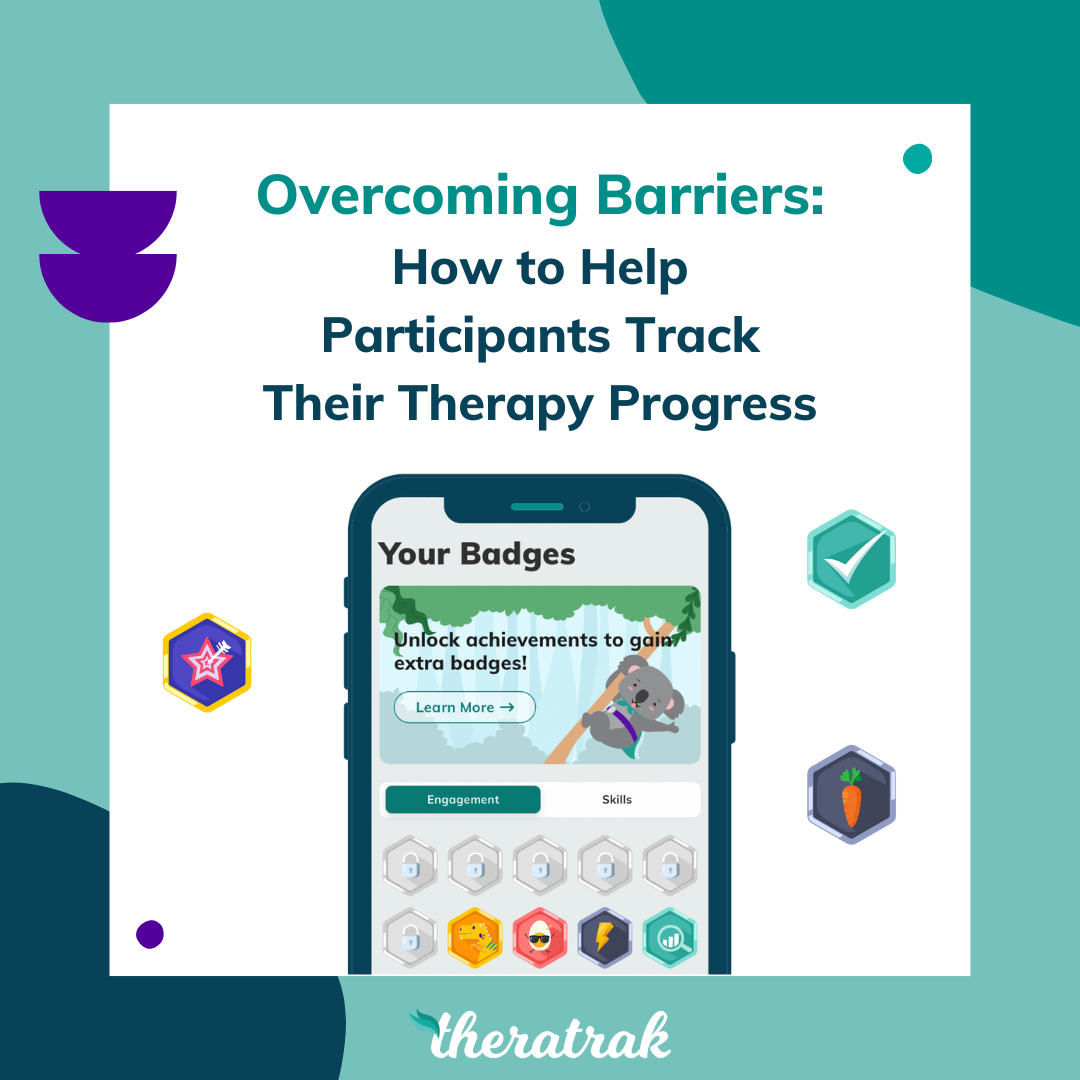
Overcoming Barriers: How to Help Participants Track Their Therapy Progress

Tracking therapy progress sounds simple on paper…

But in practice? Tracking progress long-term is often the first thing that gets dropped when a therapist's life gets busy, stressful, or overwhelming.

Still, we know that tracking home therapy programs can be a game-changer. It keeps clinicians in the loop, helps participants stay motivated, and ensures programs are effective over time.

So why is it so hard to get participants to actually track their progress outside of 1-1 therapy sessions?

At Theratrak, we’ve seen firsthand the barriers that get in the way - and the simple strategies that help clinicians support participants to break through.


Why Does Tracking Home Therapy Programs Even Matter?

Before we talk about the roadblocks, it’s worth highlighting why tracking therapy at home is worth the effort in the first place - for both therapists and participants.

  • ✅ Better outcomes: With visibility over a participant’s progress (or lack of it), clinicians can make data-driven tweaks and support goals more effectively.

  • ✅ More engagement: Seeing small wins adds up. Participants are more likely to stick to a program when they can see progress over time. All of their efforts are actually paying off!

  • ✅ Clinical confidence: Data builds trust. When you can show what’s working (and what’s not), you build a stronger case for your care.

  • ✅ Smoother communication: Real-time insights make it easier for clinicians and families to stay aligned and take action quickly. Quick responses are especially important when participants don’t fully understand activities, their needs change outside of sessions or their face-to-face sessions have big gaps between due to being within remote or regional communities (or busy clinics!).


So What Gets in the Way of Tracking Therapy Progress at Home?

Here are some of the most common reasons we’ve found from participants avoid tracking their home therapy program:

  • Home tracking feels like more admin: Especially for families already juggling a lot.

  • Home programs can bring up hard feelings: Tracking progress can highlight challenges or remind people of what’s not working.

  • Tracking at home is not immediately rewarding: Progress in therapy is slow. If you don’t see instant results, it’s easy to lose motivation.

  • Participants don’t believe in themselves: If someone already doubts their ability to improve, tracking can feel pointless - or worse, discouraging.

  • Participants or their busy families are already stressed or overwhelmed: Even the simplest task can feel too hard when you’re emotionally or mentally stretched.

  • Participants don’t see the point: Without understanding the why behind tracking, it can feel like busywork.

  • Families can worry about privacy: Not everyone is comfortable logging personal progress digitally.

  • Participants can be scared of accountability: Seeing the data makes it harder to ignore what’s not being done.

What Clinicians Can Do to Support Participants to Track Progress Over Time

You don’t need to force or nag - that never works!

A few intentional shifts in how therapists support at-home therapy tracking can make a world of difference.

1. Make it as easy as possible 💡

Use a simple, intuitive tool like Theratrak to remove friction. Templates, notifications, and real-time data make it feel supportive - not like extra homework.

2. Set clear goals together 🎯

When participants know what they’re working toward (and how tracking helps), they’re more likely to stick with it.

3. Celebrate wins - regularly! 🏆

Whether it’s finishing a task, earning a digital badge for regularly ticking off activities, or sticking to the plan for a week - positive reinforcement works.

4. Explain the “why” - to both participants and their families 🧠

Help families and participants understand how tracking helps you help them. It’s not surveillance - it’s support for better outcomes in therapy over time.

5. Address privacy openly 🛡️

Understand the digital tools and be clear about how data is used and stored. Most people just want reassurance that their info is safe and private. Theratrak uses enterprise-grade encryption software, adhere to all Australian data privacy standards - and Theratrak is even HIPPA certified for use in America.

6. Offer emotional support 💬

Be patient and empathetic. Tracking can be confronting, so a little encouragement goes a long way. With Theratrak, therapists can communicate asynchronously with their participants through the Journal feature - an excellent way to boost motivation and share encouragement in-between 1-1 sessions.

7. Make sure it’s part of your therapy process - and not just another thing to do ✅

Therapy sessions are already jam-packed trying to provide value for participants, in the short time therapists have. Make time for planning and prescribing as well as upskilling participants. And don’t forget the business side of the therapy process (invoicing *wink*).


How Theratrak Can Support Participants

Theratrak is more than a digital home program - it’s a smarter way to track, support, and improve therapy beyond the clinic walls.

Here’s what participants can expect when using the FREE Theratak Participant App:

  • Personalised programs for every participant ✏️

  • Real-time tracking and easy-to-read reports 📲

  • Motivating gamified features like progress badges and child-friendly visuals 🎮

  • Serious data security built for healthcare 🔒

  • Flexible enough to use in 1:1, group programs, remote check-ins, and more 🧩

Therapists have used Theratrak to simplify admin, improve engagement outside of sessions, and make better decisions about participant care - and we’re working on some big updates to make therapy even easier for therapists long-term.

Let’s Make Tracking Home Therapy Programs Feel Good

Tracking doesn’t have to be another thing on the to-do list. With the right support and tools, it can feel like progress, not pressure.

Curious to see how Theratrak can help?

Book a free demo today and discover how we’re making home programs easier to track - for everyone involved.

Or sign up for your FREE 30-day trial - no credit card required - and get started using Theratrak today.

Book a Theratrak Demo

5 Reasons Why Gamification within Theratrak Makes Therapy Easier for Everyone

Disengagement. Resistance. Therapy homework that gets left in the car… Every therapist has seen it.

But what if home therapy could feel more like a game… and less like homework?

Enter gamification - the secret sauce behind why kids smash through level after level of their favourite game… but struggle to finish their handwriting sheet. And the allied health industry is catching on fast.

At Theratrak, we believe motivation in therapy isn’t optional - it’s essential. That’s why we’ve co-designed our platform with gamification built in for participants, helping make therapy feel fun, personalised, and genuinely rewarding - especially for children and young people.

Here’s why gamification just makes sense (and why your clinic should be using it too):

1. Gamification Turns Therapy into a Game Plan, Not a Grind 🎯

Gamification means applying game mechanics (like badges, streaks, levels, and progress bars) to real-world tasks or non-gaming settings (like within therapy programs).

Gamification in therapy taps into what drives human motivation:

  • 🎯 Clear progress

  • 🎯 Timely feedback

  • 🎯 Achievable challenges

  • 🎯 And yes - rewards

In allied healthcare, gamification means taking the principles of play and applying them to therapy goals.

It’s not about turning therapy into a full on game like Candy Crush. It’s about turning therapy into something that is engaging, trackable, and genuinely motivating.

2. Gamification is loved by kids - And works well with them 🐨

Children are natural players. They learn through doing, experimenting, and having fun. But traditional home programs can often feel like chores. With gamification built into Theratrak, we’re flipping the script.

With Theratrak, therapists can:

  • 🐨 Prescribe complete home programs using preloaded or custom activities

  • 🐨 Add personalised instructions, images, videos, and challenges

  • 🐨 Track completion with real-time data

  • 🐨 Share reward participants with badges, streaks and achievements

  • 🐨 Reward participants with badges, streaks, and achievement progress - all features inside the Theratrak app that make sticking to therapy feel like levelling up

Kids feel ownership of their therapy plans. Parents stay informed. And therapists stop chasing updates by text or email. Customised notifications keep everyone on track.

Gamification is fun, but it’s also strategic. Every badge means more follow-through. More engagement. More momentum towards therapy goals.

3. Gamification can Boost Participation - Without the Nagging 💪

We know therapists have been using games creatively for years. The difference now? Technology lets us take this engagement further.

It’s not just about making therapy fun. It’s about making it easier for participants to take ownership of their journey.

With Theratrak, allied health therapists can:

  • 📲 Upload custom, creative, playful therapy activities

  • 📲 Use custom timed notifications and reminder to encourage practice - without the nagging

  • 📲 Turn real therapy goals into mini challenges

Therapy becomes something participants want to do - not just something they have to do.

4. Gamification Works - Like, Really Works 📈

Yes, gamification works! And not just because it’s fun.

Research shows that gamified digital tools improve:

  • ✅ Motivation

  • ✅ Therapy adherence

  • ✅ Participant satisfaction

  • ✅ Outcomes

We see this play out every day with allied health clinics using Theratrak. Participants who once avoided home programs now ask, “Did I get a badge today?”

Therapists save time chasing updates from participants because the app collects usage data and feedback in real time - and therapists often see more adherence to home programs too.

5. Gamification is not just for Kids - or just for Participants 🧠

Gamification also supports:

  • 🧠 Adult rehab - especially post-stroke or injury

  • 📚 Allied health students and CPD

  • 💡 Clinic workflows - team goals can be gamified too

At Theratrak, we’re not here to only make therapy fun for participants - we’re here to make it less exhausting for therapists. Because Theratrak tracks everything in one place, therapists benefit too - with less admin, more visibility, and tools that support better mental health and team performance.

What We've Built at Theratrak 📲

We didn’t add gamification as an afterthought.

The Theratrak team strategically planned and co-designed gamification into our platform with real therapists and participants with the mission to solve real therapy problems.

Here’s what makes Theratrak a powerful gamified tool for therapy participants:

  • 🎮 Badges for completed goals

  • 🔁 Streaks to reward consistency

  • 🔔 Smart reminders to stay on track

  • 📊 Data-driven tracking so nothing gets lost

Whether you’re supporting a 6-year-old building handwriting skills or a teen managing sensory regulation, Theratrak helps participants feel like they’re progressing - and makes therapy more fun.

Ready to Level Up? 🚀

The truth is - therapy isn’t always easy. But it doesn’t have to feel hard all the time. Therapy shouldn’t feel like a slog - for therapists or participants.

Gamification gives therapists a tool to meet participants where they’re at - and nudge them forward with something that feels rewarding. Theratrak brings therapy to life, in a way that’s evidence-informed, user-friendly, and fun.

With Theratrak, you can boost motivation, improve outcomes, and make home programs easier to complete and track.

Together we can make therapy more fun, more effective, and more rewarding - one badge at a time!


Want to see Theratrak and our gamification features in action?

Book a demo with our team to find out exactly how Theratrak works.

If you want to dive in straight away, start your free 30-day trial of Theratrak now.

Book a Demo Today

10 Things Therapists Could Be Doing Instead of Admin (Like Taking a Break)

10 Things Therapists Could Be Doing Instead of Admin (Like Taking a Break)

Between everything therapists have to do - from case notes, follow-up emails, program planning, to progress reports - admin can easily eat up your energy, and your evenings! Time you can spend doing… literally anything else. Like drinking a hot coffee. Or finally going to the bathroom between sessions. (Yes, we said it.)