You Can’t Hire Your Way Out of Burnout in Allied Health

Another referral. Another name on the waitlist. Another urgent conversation about hiring another therapist for the team.

Sound familiar?


If you're working in an allied health clinic right now, chances are your team is already stretched thin.

With the demand for NDIS services increasing and workforce shortages across Australia (especially in regional and remote areas), clinics are under enormous pressure.

The Theratrak team have spoken to clinical teams who are juggling waitlists from 10 participants to over 1,000 participants! That’s a lot of families waiting for support.

And the default response from clinics that we often hear is:

“We just need to hire more staff.”

But here’s the uncomfortable truth:

You can’t hire your way out of a broken workflow.


More therapists won’t fix outdated systems. They’ll just give you more people stuck in the same bottleneck.

Because burnout isn’t just caused by big caseloads - it’s also caused by bad processes.

One study shared that 43% of NDIS allied health professionals and disability support people said they feel burnt out at least half the time - and admin is one of the biggest contributors.

Before you post another job ad, it’s worth asking:

What if the clinical process is the problem - not the size of the therapy team?

Let’s Compare Two Very Different Clinics 👀

Meet our two fictional clinics - both passionate, busy, and trying to help as many families as possible.

But their approaches to supporting participants? Couldn’t be more different.

Clinic A: The “Hope & Hustle Allied Health” Approach 🏥

Every time the waitlist grows, this clinic hires someone new.

The team’s full of great people and dedicated therapists, but the admin never slows down.

Everyone’s managing their own documents, sending therapy notes or PDFs via email, and most therapists end up rewriting the same programs over and over.

New hires take months to onboard, only to inherit the same chaotic system.

Reports pile up. Emails go unanswered.

Burnout creeps in, and turnover stays high.

Does this sound dramatic? Maybe. But also… familiar?

Clinic B: The “Smarter Moves Therapy” Approach 💻

This team had the same problem with a rapidly growing waitlist - until they paused hiring and streamlined their systems instead.

They adopted Theratrak at their clinic and implemented it across their entire clinical team to reduce admin and support clients in new ways.

Now, each of their therapists saves at least 2 hours per week on admin with more streamlined workflows and better tracking of their repeatable tasks.

Therapists use Theratrak to send home programs, track progress, and even support waitlisted families asynchronously.

Their team feels more in control. Their clients stay more engaged.

The clinical team is scaling - hiring more clinicians and supporting more participants - sustainably.

Same people. Better system. Less stress.

Hiring Isn’t Always a Fix - Sometimes It’s Just a Delay ⌛

When we throw more staff at the problem, allied health clinics can often accidentally create new problems, such as:

  • More time spent on onboarding

  • More supervision needed for new staff

  • More payroll costs

  • Still more admin to be done

But when clinics fix the workflows and process from the top down?

  • Therapists feel supported

  • Admin becomes more manageable

  • Capacity increases - without increasing headcount

It’s not about therapists doing more. It’s about doing things better.

Working Smarter, Not Harder 🧠

Your next hire might help. But if your system is already stretched, they’ll be running uphill from day one.

Because burnout isn’t an individual therapist problem. It’s a system problem.

And fixing a culture of burnout? It starts with the way you work.

How could you create more capacity with the allied health team you already have?

Try Theratrak free for 30 days and see what a smarter workflow feels like.

Or start by checking how much time your clinic could be saving each week.

Take the 2min Clinic Quiz

Want to get stuck in and improve clinic operations now?

Claim Your 30-day FREE Trial

5 Reasons Why Gamification within Theratrak Makes Therapy Easier for Everyone

Disengagement. Resistance. Therapy homework that gets left in the car… Every therapist has seen it.

But what if home therapy could feel more like a game… and less like homework?

Enter gamification - the secret sauce behind why kids smash through level after level of their favourite game… but struggle to finish their handwriting sheet. And the allied health industry is catching on fast.

At Theratrak, we believe motivation in therapy isn’t optional - it’s essential. That’s why we’ve co-designed our platform with gamification built in for participants, helping make therapy feel fun, personalised, and genuinely rewarding - especially for children and young people.

Here’s why gamification just makes sense (and why your clinic should be using it too):

1. Gamification Turns Therapy into a Game Plan, Not a Grind 🎯

Gamification means applying game mechanics (like badges, streaks, levels, and progress bars) to real-world tasks or non-gaming settings (like within therapy programs).

Gamification in therapy taps into what drives human motivation:

  • 🎯 Clear progress

  • 🎯 Timely feedback

  • 🎯 Achievable challenges

  • 🎯 And yes - rewards

In allied healthcare, gamification means taking the principles of play and applying them to therapy goals.

It’s not about turning therapy into a full on game like Candy Crush. It’s about turning therapy into something that is engaging, trackable, and genuinely motivating.

2. Gamification is loved by kids - And works well with them 🐨

Children are natural players. They learn through doing, experimenting, and having fun. But traditional home programs can often feel like chores. With gamification built into Theratrak, we’re flipping the script.

With Theratrak, therapists can:

  • 🐨 Prescribe complete home programs using preloaded or custom activities

  • 🐨 Add personalised instructions, images, videos, and challenges

  • 🐨 Track completion with real-time data

  • 🐨 Share reward participants with badges, streaks and achievements

  • 🐨 Reward participants with badges, streaks, and achievement progress - all features inside the Theratrak app that make sticking to therapy feel like levelling up

Kids feel ownership of their therapy plans. Parents stay informed. And therapists stop chasing updates by text or email. Customised notifications keep everyone on track.

Gamification is fun, but it’s also strategic. Every badge means more follow-through. More engagement. More momentum towards therapy goals.

3. Gamification can Boost Participation - Without the Nagging 💪

We know therapists have been using games creatively for years. The difference now? Technology lets us take this engagement further.

It’s not just about making therapy fun. It’s about making it easier for participants to take ownership of their journey.

With Theratrak, allied health therapists can:

  • 📲 Upload custom, creative, playful therapy activities

  • 📲 Use custom timed notifications and reminder to encourage practice - without the nagging

  • 📲 Turn real therapy goals into mini challenges

Therapy becomes something participants want to do - not just something they have to do.

4. Gamification Works - Like, Really Works 📈

Yes, gamification works! And not just because it’s fun.

Research shows that gamified digital tools improve:

  • ✅ Motivation

  • ✅ Therapy adherence

  • ✅ Participant satisfaction

  • ✅ Outcomes

We see this play out every day with allied health clinics using Theratrak. Participants who once avoided home programs now ask, “Did I get a badge today?”

Therapists save time chasing updates from participants because the app collects usage data and feedback in real time - and therapists often see more adherence to home programs too.

5. Gamification is not just for Kids - or just for Participants 🧠

Gamification also supports:

  • 🧠 Adult rehab - especially post-stroke or injury

  • 📚 Allied health students and CPD

  • 💡 Clinic workflows - team goals can be gamified too

At Theratrak, we’re not here to only make therapy fun for participants - we’re here to make it less exhausting for therapists. Because Theratrak tracks everything in one place, therapists benefit too - with less admin, more visibility, and tools that support better mental health and team performance.

What We've Built at Theratrak 📲

We didn’t add gamification as an afterthought.

The Theratrak team strategically planned and co-designed gamification into our platform with real therapists and participants with the mission to solve real therapy problems.

Here’s what makes Theratrak a powerful gamified tool for therapy participants:

  • 🎮 Badges for completed goals

  • 🔁 Streaks to reward consistency

  • 🔔 Smart reminders to stay on track

  • 📊 Data-driven tracking so nothing gets lost

Whether you’re supporting a 6-year-old building handwriting skills or a teen managing sensory regulation, Theratrak helps participants feel like they’re progressing - and makes therapy more fun.

Ready to Level Up? 🚀

The truth is - therapy isn’t always easy. But it doesn’t have to feel hard all the time. Therapy shouldn’t feel like a slog - for therapists or participants.

Gamification gives therapists a tool to meet participants where they’re at - and nudge them forward with something that feels rewarding. Theratrak brings therapy to life, in a way that’s evidence-informed, user-friendly, and fun.

With Theratrak, you can boost motivation, improve outcomes, and make home programs easier to complete and track.

Together we can make therapy more fun, more effective, and more rewarding - one badge at a time!


Want to see Theratrak and our gamification features in action?

Book a demo with our team to find out exactly how Theratrak works.

If you want to dive in straight away, start your free 30-day trial of Theratrak now.

Book a Demo Today

10 Things Therapists Could Be Doing Instead of Admin (Like Taking a Break)

10 Things Therapists Could Be Doing Instead of Admin (Like Taking a Break)

Between everything therapists have to do - from case notes, follow-up emails, program planning, to progress reports - admin can easily eat up your energy, and your evenings! Time you can spend doing… literally anything else. Like drinking a hot coffee. Or finally going to the bathroom between sessions. (Yes, we said it.)

What’s Your Clinic’s Tech Level? The 7 Stages of Tech Adoption within Allied Health Clinics

What’s Your Clinic’s Tech Level? The 7 Stages of Tech Adoption within Allied Health Clinics

Technology in allied health can feel a bit like a sliding scale. Some days you’re running on paper diaries and post-its, other days you’re dreaming about AI-powered therapy bots that can run your clinic for you. So, where does your allied health clinic actually sit on the tech adoption spectrum?

How to Successfully Embed Theratrak into Your Allied Health Clinic’s Business Operations & Billing

How to Successfully Embed Theratrak into Your Allied Health Clinic’s Business Operations & Billing

Most therapists don't spend their day thinking about billing codes, admin time, or margins. But someone has to! Whether you’re a clinician who’s become a clinic owner, or if you’re a clinic director, Theratrak can support your business operations by saving you time - and therefore money. Learn how embedding Theratrak into your everyday workflow can make a real difference - without compromising on values.

Rethinking Therapy in 2025: 8 Ways Allied Health Clinics Are Using Theratrak

Rethinking Therapy in 2025: 8 Ways Allied Health Clinics Are Using Theratrak

We all know the magic happens outside of a therapy session but it’s often so hard for our participants to remember or even follow our rambling emails or stick figure drawings. Whether you're in a clinic, on a school run, working remotely, or supporting families from a distance, learn more about how Theratrak flexes to fit the way you deliver therapy - not the other way around.

Therapist Burnout Bingo: How Many Can You Tick Off This Week?

Therapist Burnout Bingo: How Many Can You Tick Off This Week?

Burnout is no laughing matter - but sometimes, a little humour helps us see what’s really going on in our day-to-day work. But before we fix what’s not working, we sometimes need to take a step back and recognise it. If you’re up for a laugh - and an honest look at your daily operations - try our Burnout Bingo: Clinic Edition here.

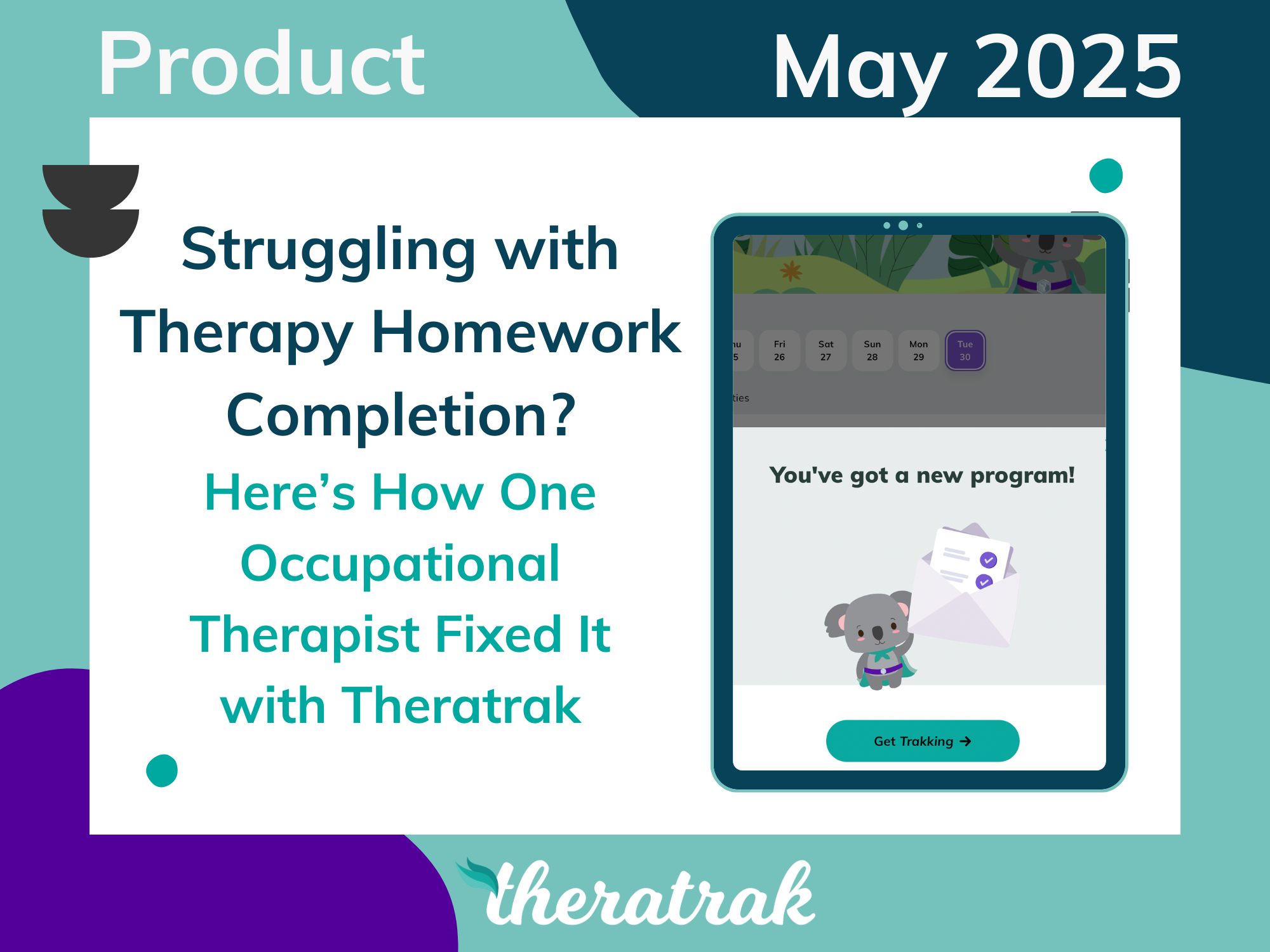
Struggling with Therapy Homework Completion? Here’s How One OT Fixed It with Theratrak

Struggling with Therapy Homework Completion? Here’s How One OT Fixed It with Theratrak

For many allied health therapists, creating personalised and motivating home programs (and tracking if their activities are actually getting done) can easily become the focus of your full-time job. Check out this case study example of how Theratrak can support a child to improve their handwriting skills by supporting them with their home therapy program.

A Day in the Life of a Therapist: Before & After Theratrak

A Day in the Life of a Therapist: Before & After Theratrak

Wondering how one tool can turn chaos into calm - and admin into actual outcomes? Compare life before and after Theratrak with us! Let’s follow Sarah - a fictional but painfully real therapist who’s trying to make it through a typical Tuesday. First, living the hard way - without game-changer digital tools. Then, thriving with Theratrak.

9 Funny Excuses for Skipping Home Therapy Programs: A Therapist-Approved Checklist for Better Engagement

9 Funny Excuses for Skipping Home Therapy Programs: A Therapist-Approved Checklist for Better Engagement

Home programs are an essential part of therapy. But let’s be real - life happens! Here are 9 of our all-time favourite excuses for skipping home therapy programs - from the relatable to the truly ridiculous. We also created a free 2min Therapy Engagement Checklist to help clinicians spot the gaps, reflect on participant follow-through and find areas to improve.